


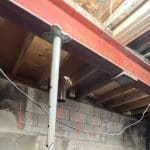
Many homeowners imagine something extreme – lifting the house into the air or tearing apart the basement. That’s not how professional underpinning works. Work is completed in small, engineered sections. The structure remains supported at all times. There’s a method behind every step.
In this blog, we are going to give you real example of basement underpinning in progress in Toronto.
Let’s start, how basement underpinning works step-by-step.
It Starts With an Inspection – Not a Jackhammer
Before anyone talks about digging, a proper structural inspection is completed.
We look at:
- Crack patterns
- Floor levels
- Moisture issues
- Soil conditions
- Load distribution
Here’s what that evaluation looks like on-site:
Sometimes underpinning is needed. Sometimes it’s not. A professional contractor should tell you the difference.
When Underpinning Becomes the Right Solution
Underpinning may be recommended when:
- Cracks continue to widen
- Settlement is uneven
- Foundation walls show movement
- Structural load is no longer evenly distributed
The process involves excavating small sections beneath the existing footing and installing reinforced concrete support to transfer the load to more stable soil below.
Here’s what controlled excavation looks like:
Each section is completed, cured, and stabilized before moving to the next. That sequencing is what keeps the home safe.
The Biggest Concern Homeowners Have
The question we hear most often: “Is my house going to shift during the work?”
If underpinning is done correctly, the answer is no. The structure stays supported the entire time.
You can see that structural control here:
There’s no guessing. It’s engineered.
What Changes After It’s Done?
The cracks stop widening. Floors stabilize. The structure is resting on reinforced support.
Here’s what final reinforcement looks like:
For most homeowners, the biggest change isn’t visual. It’s relief.
Is Basement Underpinning Common in Toronto?
Yes. Especially in older neighborhoods, homes built decades ago, and where renovations have added additional structural load.
Toronto’s soil and climate make underpinning one of the most common structural reinforcement solutions in the GTA. If you’re not sure, then let us know if you require basement underpinning services in Toronto.
The Bottom Line
Not every crack means you need underpinning. But ignoring structural movement rarely makes it better.
If you’ve noticed:
- Expanding cracks
- Sloping basement floors
- Doors or windows misaligning
- Persistent foundation moisture
It’s worth having a professional assessment done. Not to scare you. Just to understand what’s happening.
If You’re Unsure, Start With Clarity
At WillFix, basement underpinning is only recommended when it’s structurally necessary. An inspection gives you facts – not assumptions. If you’re concerned about your foundation, schedule a professional evaluation and get clear answers about your home’s stability.